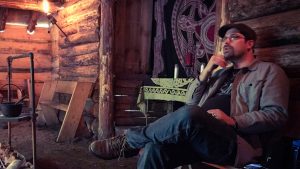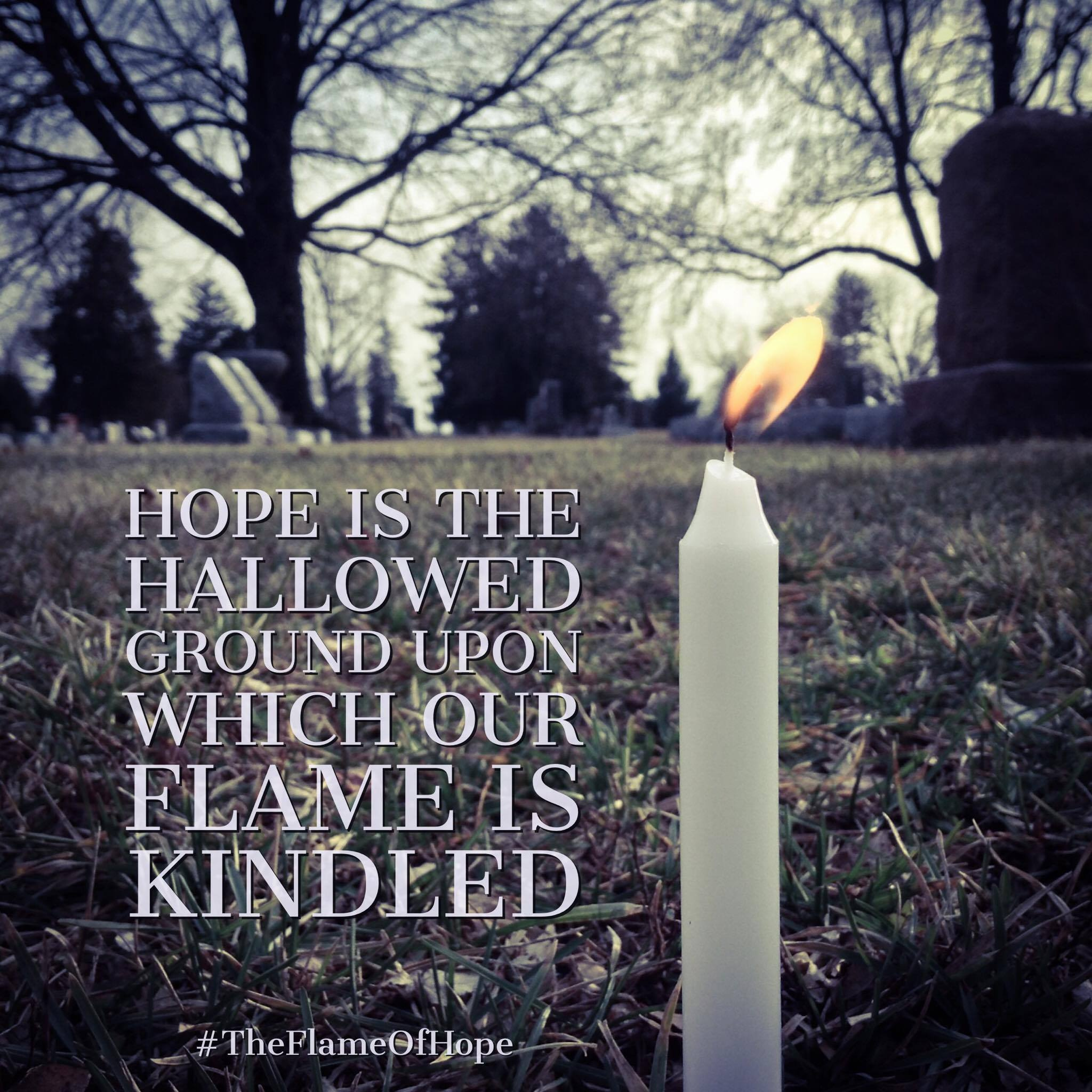
While taking the above photo for my project, Tending the Flame of Hope, well, I got “caught.”
I was at Summerland, and I took my picture of that day’s Flame of Hope during the Saturday night concert. And when I was done, I turned around to have someone say, “Hey, what were you just doing?”
I started to try and explain it, but I found it was actually really hard. It wasn’t so much the concept; it was that suddenly, there was a piece of the work that sounded too simple, too basic.
What I’m doing here, really:
The gist of the Flame of Hope work is that, when I started back at Trump’s inauguration, there were people who were scared and frightened, and (I think) rightly so. In the 577 days since that inauguration (as of this writing), I’ve been lighting a candle every day and posting it because, frankly, it’s a small action, and I think that lighting one candle per day is the very least I can do for people who are consistently disenfranchised and harmed by the direction our society is headed.
And so that is what I have done: every day, I’ve lit a candle and posted a photo of it. Some are beautiful, some are not. Some are done in the morning, and a lot are done in the last hour of the day. But they always get done.
This is the smallest, simplest expression of my piety I know how to do.
So, why is it so hard to explain?
I think it’s hard to explain this because, at it’s core, the simple nature of the candle-lighting is deceptive. The action itself is so small, and so individual, that it feels like what I know it to be (as stated above): the very least I can do.
I think that when I try to explain what I am doing, I most often explain it as a simple action I do daily. And I worry that stating the action will open me up to accusations of “virtue signalling” or trying to “pretend to make a difference.”
That’s the thing about the Flame of Hope, though. Lighting a candle was never meant to be the final step in the process: it was the first step. What the lighting of the candle does for me (or, perhaps, what it does to me) is one of those weird things about religion.
It forces me to think, every day, about people who are scared. It forces me to consider my actions in the light of hope. It drives me to change the way I interact with others.
It has changed me and made me more likely to go beyond the flame.
I donate to charitable causes more often. I write letters to my representatives more often. I call people on their shit more often. I’ve deepened my commitment to things like representation, inclusivity, and accessibility.
In many ways, it’s worth noting that the self-criticism of, “Is this all virtue signalling?” is a driving force in ensuring that it is not. (It’s also worth noting that I don’t think “virtue signalling,” when used in a pejorative sense, is anything more than a simple ad hominem argument in disguise when it encounters my logic-brain.)
And perhaps most importantly, this process has taken my very private space (my altar, my home, my kids, et al.) and made it all very public. So, so public.
Making the Private Public
I’m actually kind of private about my personal worship and work: I prefer to do it when no one is around, even though I tend to speak out loud. I like my altar to look used, but not immediately used, if that makes sense: I think I’m fine with people knowing my piety through who I am, but less so with what I do.
Which, now that I type it out, strikes me as weird for a person who is so darned orthopraxic. But sometimes, I feel like I fit better with the word orthopsychy: Living the right life. Being in balance. This might be one of those spaces.
I think a lot of this is a reflection of just how public my more usual work really is. I get a lot of personal satisfaction out of doing big public ritual, offering a space to folks to worship in our collective way, and finding commonalities. So much of my work is externally focused that “community worship” is the piety that gets my personal flame going.
I think that what I like about The Flame of Hope is the same thing: I like that it’s simple, and that people can feel what they like about it. I like that it can be common in experience and joyful in execution.
And people share it. I know it has meaning to them. Every stinkin’ day I do this, I get 3-5 people who usually share the posts, with one or two particular people sharing every single post. That’s amazing to me (and I see you, seriously, so consider this your personal-but-unnamed-shout-out, since if I’m having this struggle, you might be, too).
But it’s the process of going under the surface that I find complicating. Going behind the scenes. Having people see what I do under the power of my own motivations.
Going from this:

To this:

(Thanks, Rev. Avende, for catching me lining up my photo in the graveyard one day in February early in the Flame of Hope work.)
I’ve never actually posted the picture of myself lighting the candle in Union Cemetery before. I was in the area, attending a talk at a mosque shortly after Trump’s inauguration, looking for ways to help with Rev. Avende.
That context is actually pretty important to me, but I didn’t post it to the page because I wasn’t sure it was important to others. Perhaps I should have.
Whether it’s technical stuff like how I line up the shot, or what The Flame of Hope work pushes me to do, it’s hard for me to talk about it. It’s one of those things where I’ve found a way to make a personal thing public, but I haven’t found a way to open the gates on the parts that are still personal.
In many ways, opening a window into my work at my altar is very hard for me. Explaining to someone what the full breadth of the meaning behind #TheFlameOfHope, whether it’s the candles, the hashtag, or the pictures, is full of complicated feelings.
Of course, if you think this sounds confusing, you should see it through my eyes.
And so, I’ll keep sharing the posts, and I’ll probably share this on the Facebook page. And I’ll invite those of you who have read this far to share an image from that page that strikes your fancy to your personal Facebook page, too.
And you can talk about the ways it’s bled into your life, or you can just… not. Make your public engagement whatever is comfortable for you, because I do the same.